The Art of Ramen: From Broth to Bowl
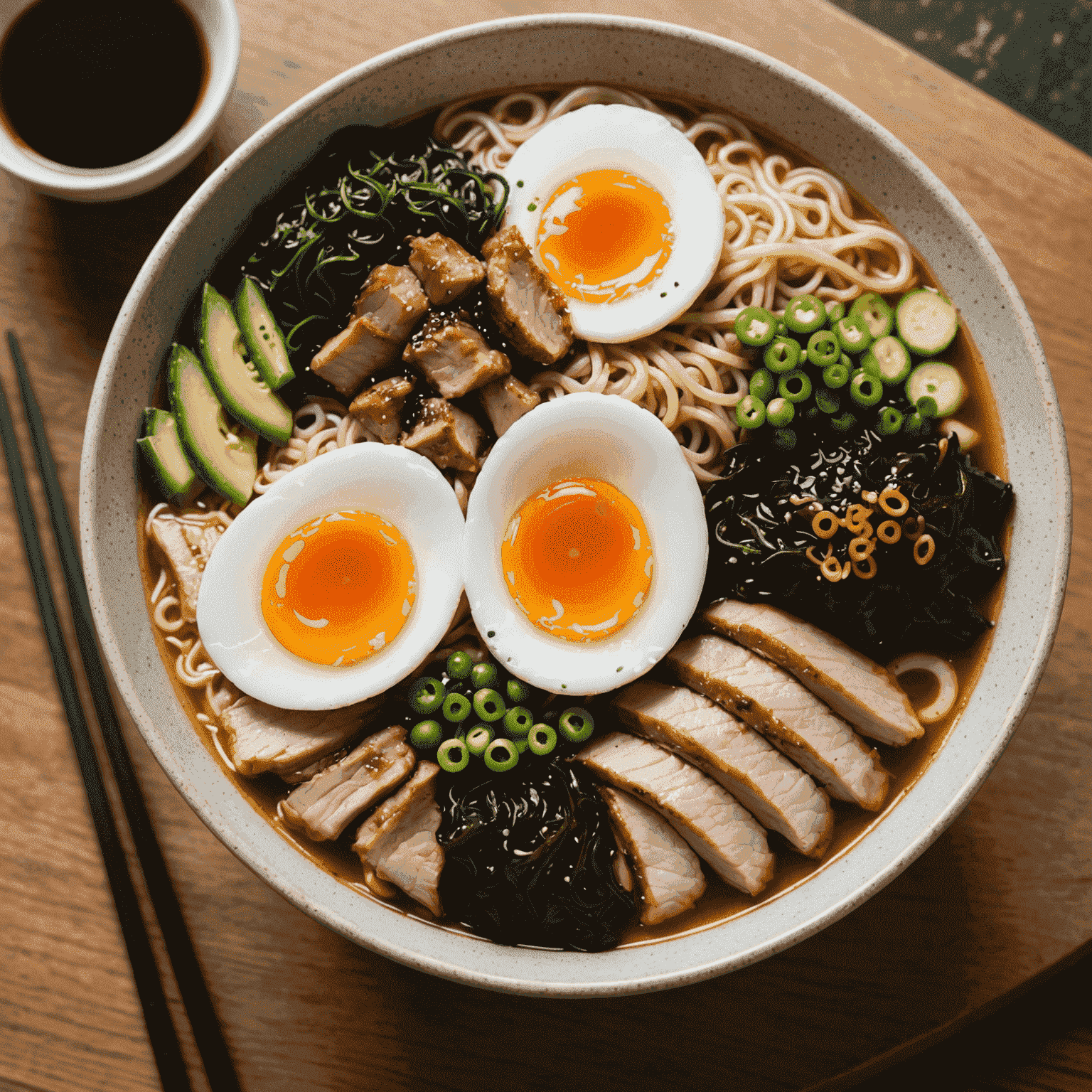
Ramen, a beloved staple of Japanese cuisine, is more than just a quick meal. It's an art form that combines rich flavors, varied textures, and meticulous preparation. In this deep dive, we'll explore the intricacies of crafting the perfect bowl of ramen from scratch.
The Foundation: Broth
The heart of any great ramen is its broth. There are several classic types:
- Tonkotsu: A rich, creamy pork bone broth simmered for hours
- Shoyu: A clear, soy sauce-based chicken or vegetable broth
- Miso: A hearty broth made with fermented soybean paste
- Shio: A light, salt-based broth
To create a tonkotsu broth, for example, simmer pork bones for 12-18 hours, allowing collagen and fat to break down and create a creamy texture.
The Soul: Noodles
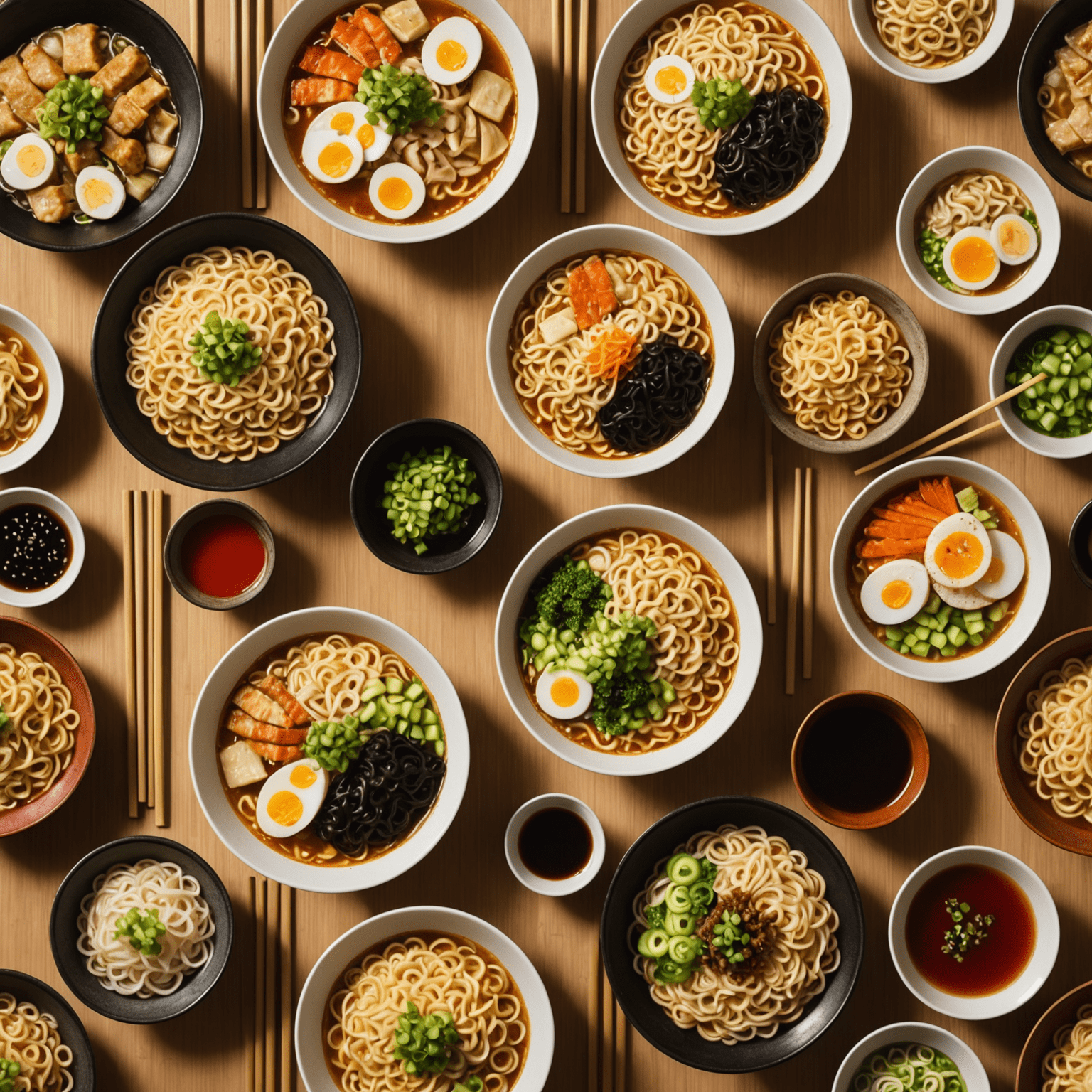
Ramen noodles come in various shapes and textures. They're typically made from wheat flour, salt, water, and kansui (alkaline water). The type of noodle often pairs with specific broths:
- Thin, straight noodles for lighter broths like shio
- Thick, wavy noodles for hearty broths like tonkotsu
- Medium-thick, curly noodles for miso ramen
The Crowning Glory: Toppings
Toppings add flavor, texture, and visual appeal to your ramen. Some popular choices include:
- Chashu (braised pork belly)
- Ajitsuke Tamago (marinated soft-boiled egg)
- Menma (fermented bamboo shoots)
- Nori (dried seaweed)
- Green onions
- Corn (popular in Hokkaido-style ramen)
- Butter (also common in Hokkaido)
Crafting Your Perfect Bowl
- Prepare the broth: This is often started a day in advance for deep flavors.
- Cook the noodles: Boil them separately, following package instructions for timing.
- Prepare toppings: Slice the chashu, marinate the eggs, chop the green onions, etc.
- Assemble: Place hot noodles in a bowl, ladle the steaming broth over them, and artfully arrange your toppings.
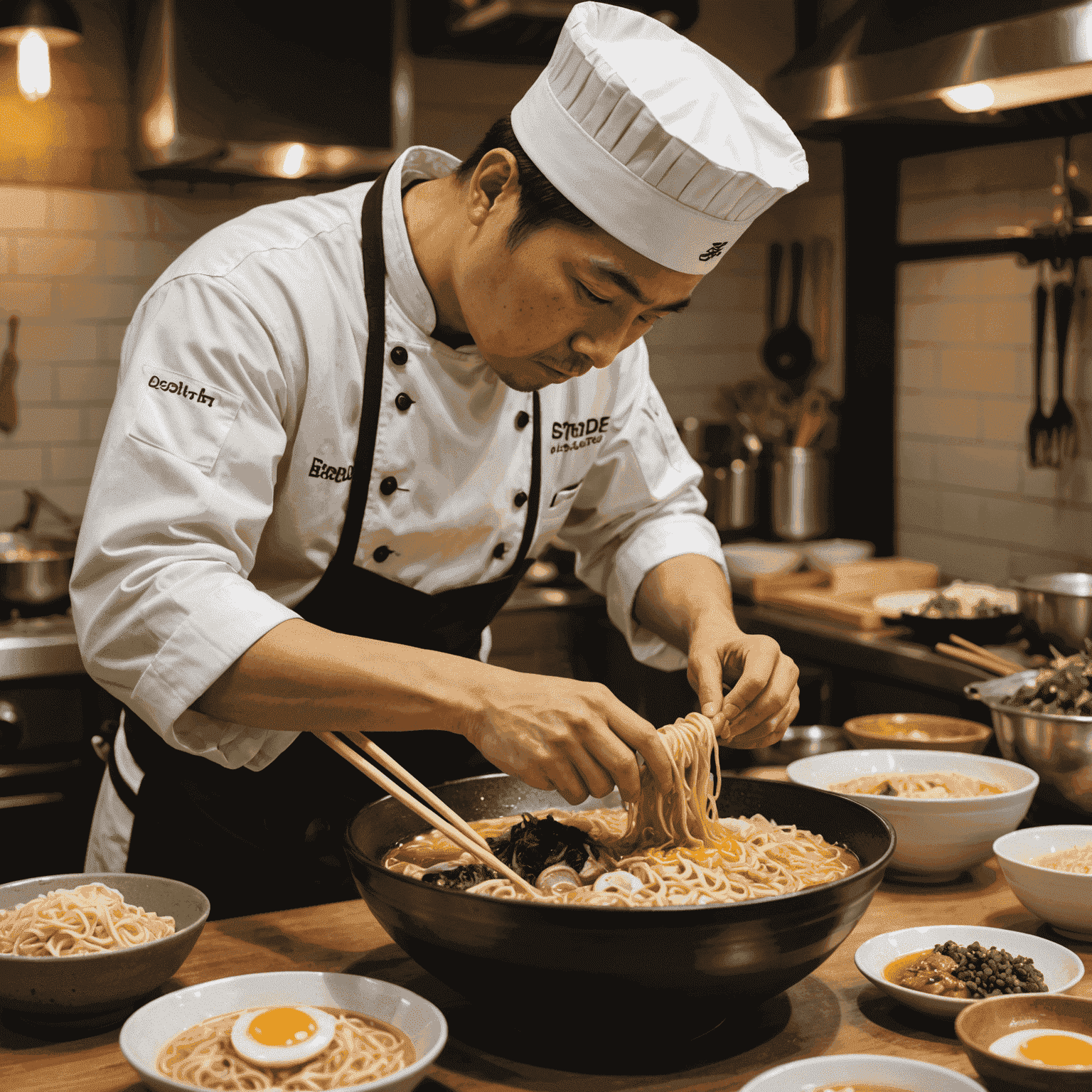
Remember, the key to great ramen is balance. Each component should complement the others, creating a harmonious bowl that's greater than the sum of its parts.
Regional Variations
Japan's diverse regions each have their own unique ramen styles:
- Sapporo: Miso ramen with butter and corn
- Tokyo: Shoyu ramen with curly noodles
- Hakata: Tonkotsu ramen with thin, straight noodles
- Kitakata: Shio ramen with thick, flat noodles
Mastering the art of ramen takes time and practice, but the results are deeply satisfying. Whether you're slurping a bowl at a local ramen-ya or crafting your own at home, remember that each bowl tells a story of tradition, innovation, and the pursuit of umami perfection.